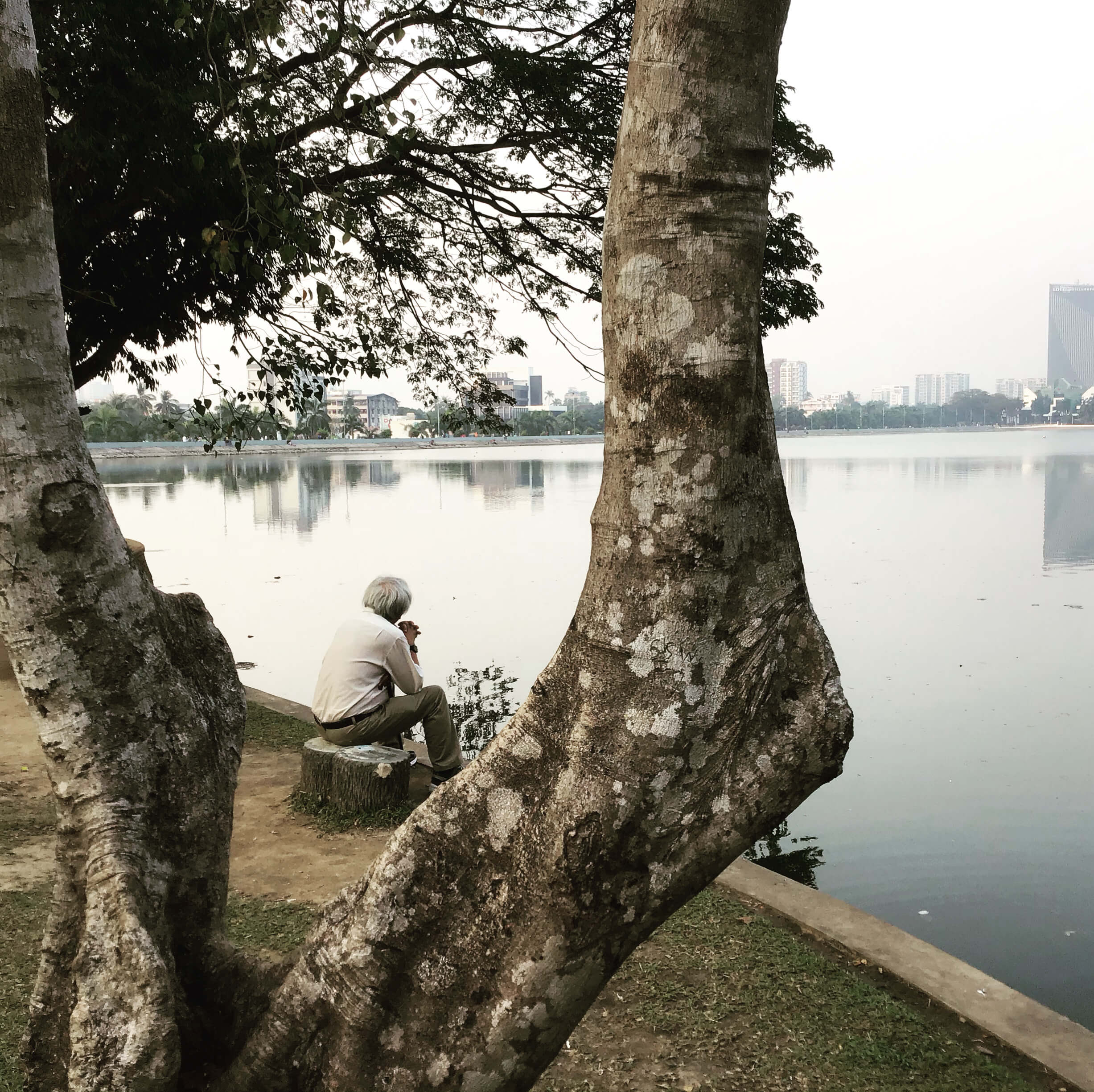
I'm building open bridges between education and technology and
Scrollytelling
Scrollytelling is a portmanteau word which combines "scrolling" and "storytelling"
Do you know what you want to do when you are “grown up”? Can you show others your future (or past) journey?
This short scrolly telling exercise is to allow you to narrate your past or consider more about your future. Tell us about your journey in anyway that you like. With a computer software, your phone, with pen and paper or a template. You might use your voice, draw pictures or pick up a pencil and write. This is your growing up journey.
What are the challenges, failures, cringe moments that have caused
you much suffering
Is it possible for an open practitioner to pass some
advice to colleagues? What are the qualities we aim to enact
among other ed techies, when mentoring them into the open
learning world?
I am inspired by the efforts of online, open and distance educators.
People who choose to be visible within the open community. The
"global north" is where the open community is most visible.Why are
open initiatives not as visible elsewhere? Especially in my corner
of the world. More >>
Updated: 20 Feb 2025
Digital Footprints
PhD students increasingly look to the web to openly communicate
their research. The following three workshops are for those who want
to make their research outputs more visible and available.
To that end, "Digital Footprints" is a series of workshops
for emerging scholars who would like to cultivate a broader
audience.
1 | Academic Profiles
In this session, we're looking an online bio profile
and our "weak ties". Asking how might we leverage academic (and
personal) social networks to enlarge our reach
2 | Visible Outputs
In this session, we're switching our focus to institutional tools
or community driven platforms that are available to expand the reach
of your outputs.
3 | More Present Media
In this session, we're gone beyond what you have written and are
looking at alternate formats
for presenting your thoughts and research.
You have been "transmogrified"
Learning designers discovered that educational practices had been
"transmogrified" by educational technology. Thanks Calvin &
Hobbes!
Some people might take issue with the word "transmogrification,"
preferring to refer to the shift online as a "transformation" or
"revolution." I disagree. Education is steadily being inscribed on by
big tech. Their coded logic's have left a mark on class practices.
Teachers are becoming appendages of the machine. Professional
judgement is shifting away from educators. Pre-emptive ed tech on
proprietary platforms and the commercial cloud are programming
students.
Platforms became a campus replacement. Classes a "delivered" and
"packaged" in an isomorphic form.
These classroom copies also measured, monitored and managed
institutional activity and the data generated by its
constituents. This is a cartoon version of
education.
Don't like it? Me neither!
Designing the webinar
Emergency
Remote Teaching (ERT) has been frequently mentioned as a topic
in my blog. I started using these ideas for a chapter entitled
"Designing the Webinar." It WAS meant to be published in a book
called Learning Design Voices...
This was business communications format that metamorphosed into a
globally accepted norm, dubbed "the webinar". I found many
resources available to help with webinar mechanics. However, there
wasn't that much critical literature that examines the implications
of designing learning experiences in this style in South African
Higher Education setting. The longer I looked, the more I began to
think that the webinar was designing me and higher education. to use
expensive data and a format that required a laptop. The webinar shut
down voices and I was expected to use the platform in a particular
way. I felt very uncomfortable.
Seeing like a citizen
I'm not sure about your experience of bureaucrats who work in
public sector. I get it.There's a variety of intermediaries are
involved in lobbying, procurement, branding and credentialing for
big tech. It seems to me that most "digital transformation"
initiatives within the public sector are a slippery down-slope into
further commercialization. Handing over and outsourcing a central
competency to commercial actors or Silicon Valley platforms
entrenches the private sector involvement in public services. It
doesn't necessarily improve bureaucrats "public service" and bottom
up their effectiveness
Is the same true for education's expansion online and the enablers
of "digital transformation" in schools and universities? Can
parallels be drawn?I'm afraid that we are seeing increased pressure
to extend a commercial version of tech throughout the education
system. And these initiatives are taking a "bottom up" teacher led
approach. Where the educators are acting as brokers for devices and
platforms, instead of being critical pedagogues.
There's a need for meaningful and effective communities, with
members who are in and around vulnerable classrooms who can lead and
encourage collective action
CC Certificate Award
I've been awarded a Creative Commons Certificate after attending
the June 2020 Creative Commons (CC) Copyright Course
I am a consistent advocate for openness. I find myself regularly
recommending CC licenses as a viable alternative to traditional
copyright protection. Open licensing allows ed techies to strengthen
their collective efforts. This approach is especially relevant in
under served communities and allows all to build a more equitable,
accessible and innovative world, through open sharing of knowledge
and culture.
I use CC licenses with clients, both the operational level, to
help the people I'm working with to understand copyright issues and
alternative means to manage their creative outputs. And at a policy
level, giving guidance about suitable versions of the license for
the institution.
This badge serves to confirm my knowledge about
the commons, open practices and the ethos of the movement.
Time Management
One of the more complex challenges associated with digital, is
managing the many competing and shifting priorities that face remote
students.
Logistical considerations such as class size, venues and timeslots
are usually confirmed and published in the academic calendar. When
online, a clear and (preferably) consistent schedule or timetable
that compliments the academic calendar is also necessary. When
learning is behind a screen, a timetable adds rhythm to a flexible
day and communicates the many course-related events that need to be
juggled and prioritized by the off-campus student, who is attending
to multiple responsibilities.
Calendar time,
Study time and
Pacing
Contact hours
Presence
Time shift
Down for Maintenance
Yes, you can see. Things are in a bit of a muddle at the moment.
I moved my website to a new service provider, messed up my blog and
decided that this would be a good time to improve the site's look
and feel.
Pleased to support the communication of credible sources of
information about Covid-19. Little puzzled why the pandemic
communications portal has chosen "sacoronavirus.co.za"*.
If you want to reduce the likelihood of increasing the information
disorder amid the pandemic, then wouldn’t it make more sense to
distinguish between governmental and commercial sources of
information?
* "sacoronavirus.gov.za."
Covid Teaching
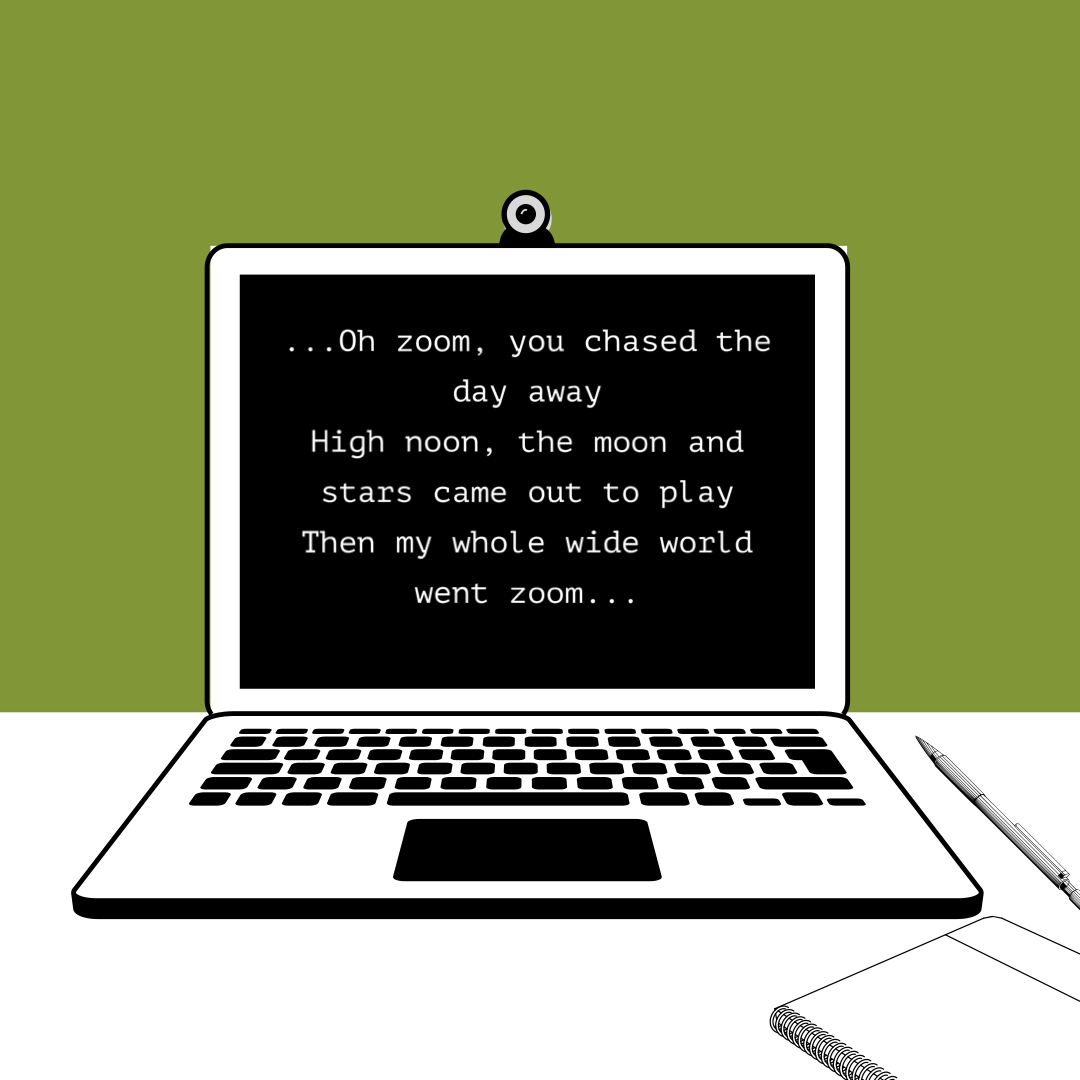
Online education is not the same as Covid teaching, and a
distinction between the two needs to be drawn.
In the middle of a crisis, it can be hard to imagine what good
online education looks like. Isolation, uncertainty and stress makes
us revert to digital twins, like Zoom. Many of the initial
mitigation steps taken by management, administrators and educators
to respond to the circumstances have been heroic. However, our
current short-term emergency efforts are, at best, a rapid response
to a set of immediate circumstances.
I do not want to be the source of unsolicited advice. But I do want
to share some ideas that go beyond Zoom. Over the next couple of
weeks, I’ll be posting some of these ideas here.
Visits to Yangon
I'm working with Montrose
to co-author an ICT textbook, intended to improve the Myanmar
pre-service teacher education system.
Ready for Work
Pleased to be working with Pretoria University on a programme
entitled "Ready for Work". The online course aims to develop
student’s essential workplace skills as they think about their
employment future.
"Open education for an open future”
Was fortunate to attend OE
Global in Milan in Nov ember 2019